
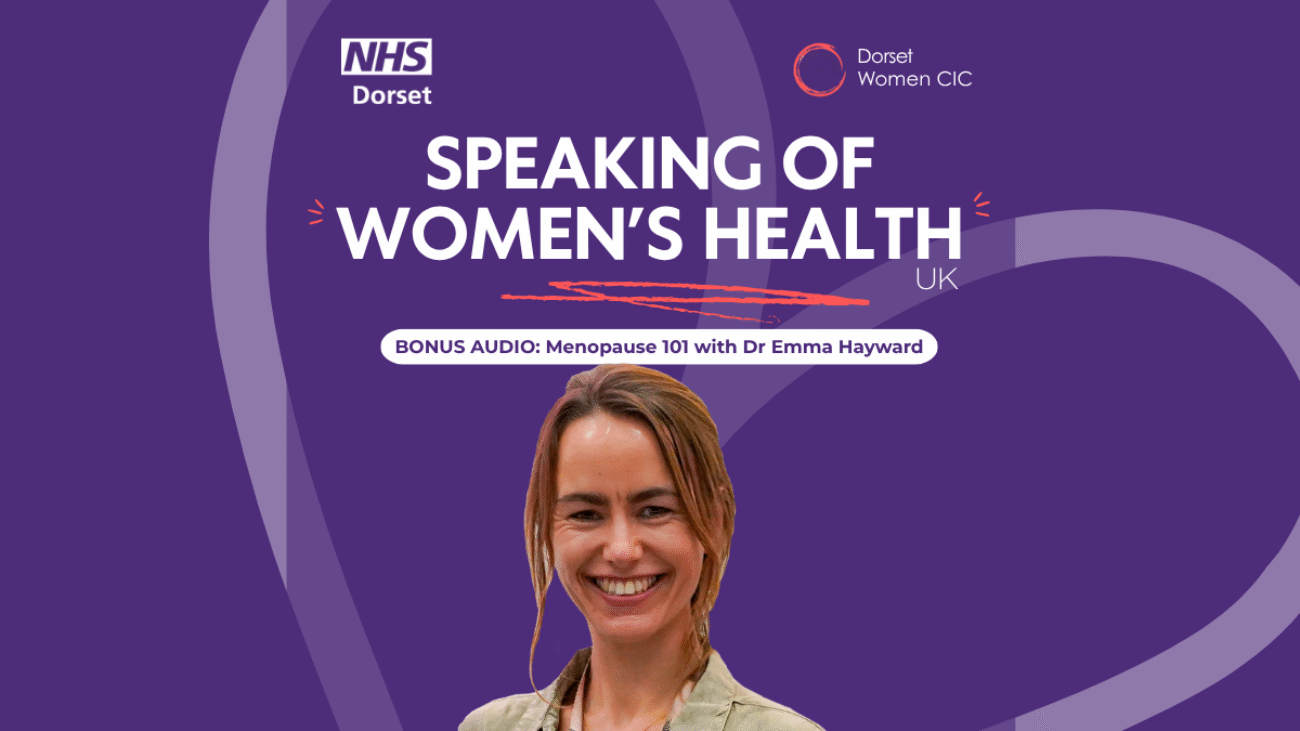
Season 1, BONUS #1, Details:
Menopause 101 with Dr Emma Hayward
Episode Overview:
In this bonus episode, GP and women’s health academic Dr Emma Hayward unpacks what really happens when you see your GP about menopause.
From HRT options and vaginal oestrogen to genital urinary syndrome of menopause (GSM), misdiagnosis, and how to advocate for yourself, Dr Emma offers clear, compassionate guidance for anyone navigating menopausal symptoms.
Detailed Episode Show Notes:
“Menopause affects 51% of the population if we’re lucky enough to live old enough… so it isn’t a niche topic.”
Welcome to the first of four very special bonus episodes of Speaking of Women’s Health!
In each episode, we’ll dive deeper into the topics we’ve covered on the show with our in-house Senior Lecturer and Practicing GP, Dr Emma Hayward.
She’s incredibly well-versed in women’s health issues, and makes complex issues simple to digest, so that you know exactly what to expect when coming to a GP for support.
This first bonus episode unpacks what really happens when you see your GP about menopause, when you should go to them for support, and the options for managing menopause both with, and without, HRT.
👤 Guest profile:
Dr Emma Hayward
- Practicing NHS GP
- Senior Lecturer at Bournemouth University
⏱️ Chapters:
[0:00] – Introductions and the GP’s role in menopause support
[5:30] – Delivery methods for HRT
[7:10] – Managing menopause without HRT
[12:00] – When to see a GP
🔑Key Themes:
- The GP’s Role in Menopause Care
- Diagnosis and Management of Menopause
- HRT Options and Individualised Treatment
- Genitourinary Syndrome of Menopause (GSM) and Vaginal Health
- Advocacy, Inconsistent Care, and Empowering Women
📖 Resources Mentioned:
- Women’s Health Support in Dorset: https://ourdorset.org.uk/women/
- British Menopause Society: https://thebms.org.uk/
- Women’s Health Concern: https://www.womens-health-concern.org/
- Dorset Menopause Support: https://www.dorsetmenopausesupport.co.uk/
🔗 Connect with us:
- Dr Emma Hayward, LinkedIn: https://www.linkedin.com/in/dremmathurston/
- Marianne Storey, LinkedIn: https://www.linkedin.com/in/marianne-storey-46938435/
- Anjali Mavi, LinkedIn: https://www.linkedin.com/in/anjali-mavi-66a5a86/
- Dorset Women CIC Website: https://dorsetwomen.org.uk/
- Women’s Health Support in Dorset: https://ourdorset.org.uk/women/
🎯 Action Items for Listeners:
- Learn your own symptom triggers and patterns
- When booking a GP appointment about menopause, ask for someone with a special interest in women’s health/menopause
- If you use over‑the‑counter vaginal oestrogen and it doesn’t help within about three months, see a clinician for an examination
- Seek further help if pharmacy treatments for things like cystitis aren’t working
- Advocate for yourself if you feel dismissed or not listened to
- Visit the Women’s Health website for evidence-based health information.
- Share the podcast and website with other women in the community.
- Consider how to advocate for women’s health in your local area.
- Encourage male family members and partners to learn about women’s health issues.
💡 Top Quotes:
4:15 – Dr Emma Hayward:
“There’s a complex array of things that a medical professional will be thinking about when you come to you and you say, ‘I would like HRT’.”
8:30 – Dr Emma Hayward
“Genitourinary syndrome of menopause predisposes women to urinary tract infections, which later on in life can end up causing sepsis and be fatal, so it’s actually really important that we talk about it.”
12:15 – Dr Emma Hayward
“If you buy oestrogen over the counter and it’s not helped within three months, make sure you do get examined… there are other conditions which are really important to rule out.”
16:00 – Dr Emma Hayward
“Menstrual irregularity is one of the defining features that we would look for, but it is not the be‑all and end‑all of a diagnosis of perimenopause.”
16:55 – Dr Emma Hayward
“Menopause affects 51% of the population if we’re lucky enough to live old enough… so it isn’t a niche topic.”
 Transcript: Find the full transcript here. Please note, these notes are AI generated.